
Executive Summary
Pakistan’s Female Labor Force Participation (FLFP) is at 22 percent, with the FLFP in urban Pakistan among the lowest in the world – hovering at around 10 percent for over 20 years.[i] According to the World Bank’s Enterprise Survey, women in Pakistan hold only one in 14 jobs in the country’s businesses,[ii] reflecting the multidimensional challenges that women face both at the workplace and outside of it. Pakistan’s “Vision 2025” sets an ambitious target of increasing FLFP to 45 percent by 2025,[iii] however private sector action is key to meeting this target. This is contingent upon rightly identifying the challenges that women tend to face in and outside the workplace, and formulating appropriate interventions for addressing the identified challenges.
Women face gender-based inequality and numerous barriers to participation and success in the workplace and in business. These include supply-side barriers such as imperfect information about employers; capital market imperfections that make it difficult to access funding; and norms associated with gender roles. On the demand-side, barriers include laws and regulations, perceived higher costs of hiring women (sometimes due to the provision of benefits and services like maternity leave and childcare); imperfect information about women’s skills and capabilities; skills mismatch; and discrimination.[iv] [v] [vi]
Pakistan can increase its gross domestic product (GDP) up to an estimated 30 percent by ensuring that women have an equal opportunity in economic participation.[vii] By identifying and addressing barriers to women’s employment that originate in and outside the workplace, private sector companies can strengthen their workplaces and can unlock opportunities for increased profit, growth, and innovation.[viii] The competitiveness and productivity of firms in Pakistan can be significantly enhanced by recruiting, retaining, and promoting diverse skills and talents. The first step, however, is the understanding the landscape with respect to challenges that women face, and the opportunities available, which is possible of private sector firms and companies are transparent and accountable.
Well-designed social disclosures[1] supported by feedback mechanisms can be effective instruments in promoting gender equality practices across sectors and industries – providing the framework for increased accountability and ultimately leading to improved jobs, while effectively showcasing to investors how well a business is managing its human capital – a critical resource for the business’ delivery architecture.
There exists a strong business case for social disclosure and transparency. Regular and voluntary social disclosure by a company can fill information gaps for customers, investors, and employees, and as a result, can have a positive effect on its revenues and build better access to human capital. Their use also promotes more efficient capital markets by ensuring fair disclosure to all investors and preventing asymmetric information flows.

Key Findings
The research showed that 45 percent of the companies have never publicly disclosed gender specific targets. This statistic signals the need for building capacity and buy-in within Pakistan’s private sector to better connect gender disclosures with business goals. For companies to establish greater accountability and transparency of gender equality claims, targets on gender equality (such as those with respect to gender pay gap, employment, retention, and promotion) should be made public.
More than half the companies have less than 15 percent women working for them (Figure 3); 50 percent of all participating companies have explicit goals to employ at least 15 percent women but have been unable to reach their respective targets (of women’s employment at the company level). The figures for the proportion of women in leadership roles highlight persistent inequality, with 63 percent of companies having less than 5 percent of women in senior management positions. Furthermore, 60 percent of the companies who participated have either none, or only one female member on their board of directors.

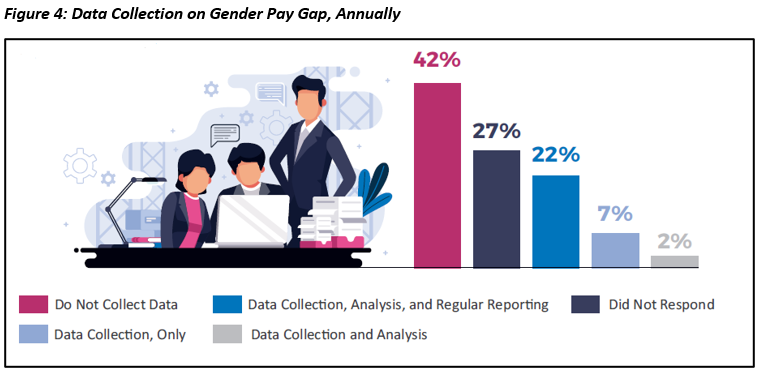
Nearly 70 percent of companies do not collect data on gender pay gap (Figure 4). Of the minority (30 percent) that do, 50 percent claim that no such gap exists within their organization and have not taken any action as a result of its gender pay gap analysis. It is possible that most Pakistani companies are resource-constrained or lack technical expertise to carry out complicated gender pay gap analysis.
Over a third (34 percent) of the companies did not respond when asked if they offered paid maternity or paternity leave. The remaining 66 percent offer paid maternity leave to their female employees. 66 percent of those offering paid maternity leave did so in accordance with the law (Maternity and Paternity Leave Act 2020[1])[2], and 20 percent offered maternity benefits which were more generous than the law.
38 percent of the companies offered paid paternity leave. 70 percent of those offering paid paternity leave did so in accordance with the law (Maternity and Paternity Leave Act 2020), 24 percent offered maternity benefits which were more generous than the law, and six percent offered paternity benefits less generous that the law.
60 percent of the companies have developed and implemented formal polices that address violence and harassment in the workplace, while seven percent do not have such policies (33 percent of the companies chose not to respond).
Policy Recommendations
Based on the publicly available findings of the diagnostic and the data, it is recommended for private sector companies in Pakistan to begin adopting social disclosure practices, engaging in regular reporting, and improving gender equality:
- Pro-actively collect disaggregated data to inform tailored solutions and formulate gender-specific, evidence-based policies,
- Engage in regular reporting and adopt disclosure practice, which will enable companies to become more competitive, and attract greater investment opportunities,
- Strongly support women’s career progression within the company by adopting gender-specific promotion mechanisms,
- Actively solve for the unique challenges that working women face and offer provisions such as flexible work arrangements for staff.
Introduction
Gender equality is a central component of development. However, in Pakistan, gender inequality continues to be acute and multidimensional, dampening the potential benefits for women, as well as for the country’s overall economy. Women face gender-based inequality, and barriers to participation and success in the workplace and in business. According to the World Economic Forum, the Global Gender Gap Index rank of Pakistan is 153 among 156 countries.[i] The index measures countries’ progress towards gender parity on economic participation and opportunity, educational attainment, health and survival and political empowerment.
Similarly, Pakistan’s Gender Inequality Index (GII) score, which measures inequalities across three important aspects of human development – reproductive health, empowerment, and economic status[1] -is higher than South Asia’s regional (SAR) average, a region that is ranked second most unequal in the world.[ii] GII projects the human development costs of gender inequality. Thus, the higher the GII value, the more the disparities between men and women and the greater the loss to human development.
Women’s Employment in Pakistan – Current Landscape
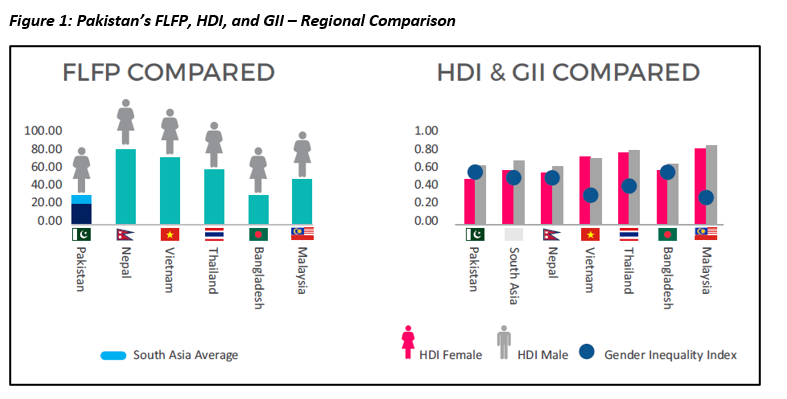
Inclusive and sustainable growth can only be realized when women and men enjoy the same opportunities, rights, and obligations. This implies equality in the distribution of power and influence, and having equal opportunities for financial independence, education, and employment. In Pakistan, though women account for 49 percent of the country’s population, female labor force participation (FLFP) rate is merely 22 percent,[iii] with the majority of women engaged in low-quality and low-paying jobs. FLFP is low across all sectors and less than SAR regional average. It is significantly below Pakistan’s comparators (Figure 1).
According to the World Bank’s Enterprise Survey, women in Pakistan hold only one in 14 jobs in the country’s businesses.[i] Furthermore, just one in 17 companies in Pakistan (or about 6 percent) is led by a woman.[ii] Educated women – those working in urban and provincial capitals – struggle to enter and stay in the workforce. Women with low education levels face even more limitations. FLFP in urban Pakistan is among the lowest in the world, having hovered around 10 percent for over 20 years.
Challenges to Female Labor Force Participation in Pakistan
There are multiple barriers to female participation in the workforce which stem from social and cultural norms, including care demands, mobility constraints, gender-based violence, lack of agency and more. Additionally, structural barriers such as firms demonstrating a discriminatory attitude, and a lack of awareness of workplace laws can further impede women’s participation in the workforce. For these reasons, urban female labor force participation in Pakistan is particularly low and has not risen much over the last two decades.
When women do participate in the workforce, their presence is concentrated in a narrow set of industries and occupations. Occupation profiles across the board vary distinctly by gender. Urban men are more likely to be engaged in trades such as construction and services, whereas urban women are engaged in jobs such as domestic help or in apparel and textiles. At higher levels of education, the education sector features as the largest employer for urban women whereas urban men work across a varied number of service-oriented jobs. There is limited representation of urban women in services and retail.[iv]
Re-aligning corporate practices and interventions at the firm level can help identify the distinct causes of gender inequality at the workplace, and also address many of the underlying root causes that exacerbate gender inequalities at the workplace.
The Business Case for Gender Equality
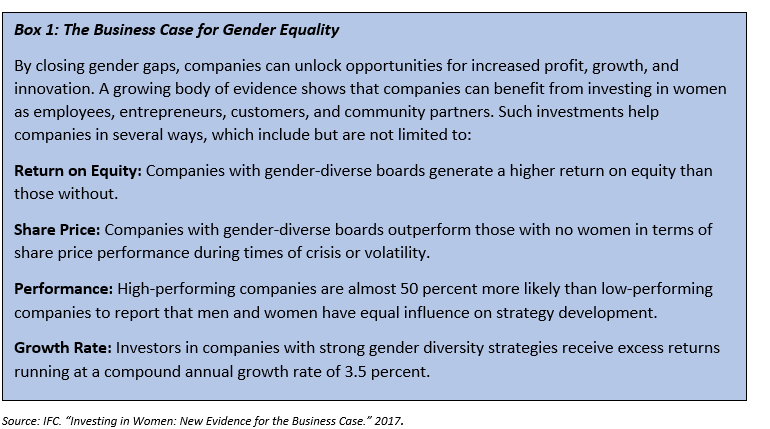
Pakistan can increase its gross domestic product (GDP) up to 30 percent by ensuring that women have an equal opportunity in economic participation.[v] By identifying and addressing barriers to women’s employment that originate in and outside the workplace, private sector companies can strengthen their workplaces. Competitiveness could be significantly enhanced if firms recruit, retain, and promote diverse skills and talents, which are urgently needed to be more productive and innovative.
Few companies have widened their search for talent and skills by tapping into Pakistan’s vastly underutilized female talent pool. The aim of this report is to expand the awareness, identify current corporate practices, and make policy recommendations. Findings and recommendations will enable private sector companies in Pakistan to make impactful and actionable changes in their policies – such that those (policies) can be formulated and implemented which are conducive for gender inclusive and sustainable growth.
Social Disclosures
Social disclosures can be defined as an organization’s voluntary practice of publicly sharing data on the composition and management of their workforce – reporting organizational policies and strategies, and revealing key benchmarks.
In developing countries, economic and social development is often limited by an insufficient flow of private capital. In part, this is due to a heightened perception of risk in these countries, compounded by a lack of information or transparency. Social disclosures, therefore, provide the framework for increased transparency and accountability, and ultimately lead to improved jobs across the full scope of companies’ operations – supporting productivity and long-term business success.
In addition to the business case for greater gender equality, there exists a strong business case for social disclosure and transparency. Regular and voluntary social disclosure by a company can fill information gaps for customers, investors, and employees and, as a result, can have a positive effect on its revenues and build better access to human capital. Their use also promotes more efficient capital markets by ensuring fair disclosure to all investors and preventing asymmetric information flows.[i]
For investors, the availability of high-quality, comparable workforce data is a key determinant to evaluate companies over the long term, enabling investors to build their understanding of workforce issues and opportunities, leading to better outcomes. Social disclosure requirements that are well-designed and supported by feedback mechanisms can be effective instruments for promoting positive gender practices across sectors and industries and within spatial contexts.
Gender Disclosures
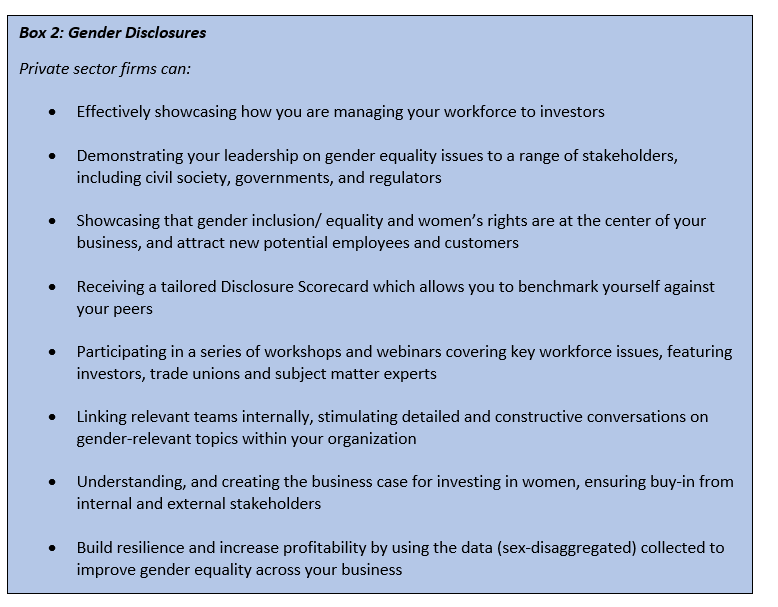
Gender disclosures are a subset of social disclosures that focus on gender-specific policies and objectives – this includes reporting on gender mainstreaming practices being implemented by private sector companies. Integrating gender-related information into disclosures can assist organizations in publicly demonstrating their accountability to gender equality and women’s economic participation. It enables all interested stakeholders to gain insights into the effects of the organization’s operations, products, and services on both women and men. Additionally, gender disclosures can help stakeholders such as employees, communities, consumers, and investors understand how a reporting organization contributes to gender equality within its sphere of influence.
(The Lack of) Gender Disaggregated Data
Among other things, achieving gender equality requires significant amounts of accurate gender data. In Pakistan, however, there is a major gap in data that is disaggregated by sex, and this gap often renders women’s societal, cultural, and economic contributions and obstacles invisible. As of December 2021, only 49.1 percent of indicators needed to monitor the Sustainable Development Goals (SDGs) from a gender perspective were available for Pakistan, with key gaps in some areas, and lack of comparable methodologies for regular monitoring in others.[i]
Such gaps in data can exacerbate existing gender divides, feeding and reinforcing biases in social programs, access to financial and other services, economic opportunities, and even development programs designed to address gender inequality. Part of the solution may be in the form of corporate and administrative data, collected and reported at the organizational level – in the form of gender disclosures – which if used effectively, can provide the volume of data needed to portray women and their situations accurately, and in turn inform the creation of evidence-based solutions improving women’s economic participation in Pakistan.

Despite progress from some companies on issues such as pay, working conditions and diversity, there remains a gap in meaningful publicly available corporate data about the opportunities and challenges that employees encounter. IFC in collaboration with PBC, prepared and disseminated a Gender Disclosure Diagnostic through which companies were invited to engage in the practice of social (gender) disclosures in line with international best practices and standards in corporate governance, culture, and risk management.
Gender Disclosure Diagnostic
Existing research shows that several factors influence women’s participation in the workforce. For example, firms may harbor (unconscious or at times subconscious) biases against hiring women or may not have basic facilities such as restrooms for women. They may not have policies to protect women from sexual harassment or facilities and accommodations such as breastfeeding and lactation rooms for working mothers, flexible work arrangements and paid leave for working parents.[i] Women’s economic participation is also constrained by socio-cultural attitudes toward women in the workforce and disproportionate household responsibilities, including time spent on unpaid care, and impediments posed by limited mobility due to harassment on transportation systems, among other reasons. In line with these barriers, the gender disclosure diagnostic delves in to five key Gender Equality Principles, as well as the broader organizational culture and governing principles that can impact gender equality in the workplace.
Five Key Gender Equality Principles (GEP)
Women’s role in the private sector, and the opportunities (conversely the challenges) they have can be analyzed with respect to five key Gender Equity Principles (GEPs) which capture gender mainstreaming practices commonly adopted by private sector companies.
- Leadership and Accountability
Organizational governance and values are often the starting point for reporting gender-related organizational practices, as an organization’s governing principles and values affect everything it does. In this section, companies were asked to indicate if they had an overall policy / strategy in place to ensure the importance of mainstreaming gender equality, and the ways in which the organization’s leadership ensured gender equality at the workplace.
- Gender Diversity (Workforce Representation)
Recruiting women into the formal workforce represents a significant opportunity for Pakistani companies to optimize financial and operations gains, as workforce diversity has been linked to a variety of business benefits, including increased productivity, competitiveness, and growth. In this section, participating organizations were asked to indicate policies on workforce diversity and reveal the gender composition of their workforce.
- Gender Pay Gaps (Compensation and Benefits)
The gender pay gap[1] is the difference between women’s and men’s average earnings. Organizations that actively take measures to achieve gender pay equity set goals in their remuneration policies/ strategies. In this section, companies were asked to share organization-wide pay gaps, policies to address the gap, and measures they have implemented to achieve gender pay equity.
- Optimal Workplace Culture
Optimal workplace culture usually includes provisions for paid parental leave and childcare, flexible work arrangements, health and well-being, and respectful workplaces. An equitable work arrangement is an agreement (formal and/or informal) between a workplace and an employee that encourages both women and men to utilize such provisions, alleviating challenges faced at the workplace. In this section, companies were asked to share common practices and provisions offered towards equitable work arrangements. The section comprised of questions about (i) parental leave, return to work and childcare support, (ii) flexible work, (iii) health and well-being, and (iv) respectful workplaces.
- Coaching and Mentoring for Female Employees
In this section, companies were asked about policies and strategies that may have been implemented to prepare and promote women for leadership positions and roles within their organizations.
Data Findings and Analysis
Numbers at a Glance
Company Structure and Sectoral Background
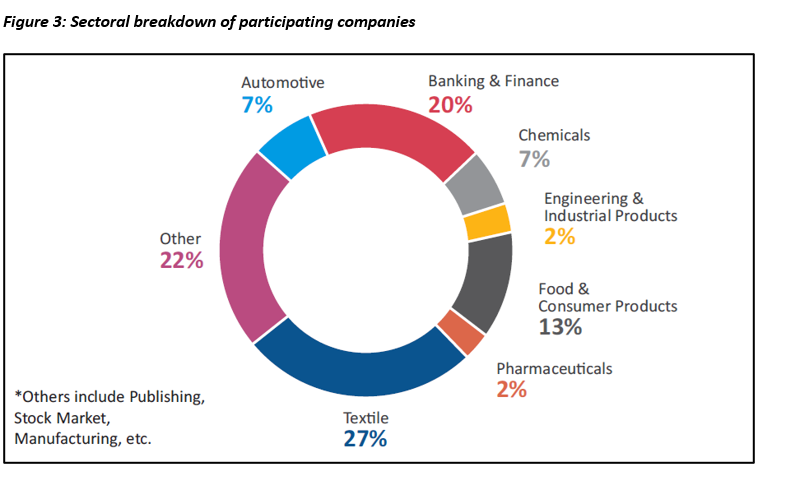
The overall mix of the companies that participated represented diverse sectors of the country’s economy (table), with the majority (27 percent) belonging to the Textile sector, followed by Banking & Finance (20 percent). The companies represented both those that were Publicly Listed, and those that identified as Non-Listed Private Limited.
Parent Company and Group Policies
It is important to note that 60 percent of the companies that participated belong to a parent group of company. Of the companies that belong to a parent group, 96 percent (i.e., all except for one company) tend to follow the same group policy as that of their parent company, signifying the homogeneity of policies among parent and subsidiary companies. While it cannot be concluded that all companies have similar policies, it is fair to assume that the broader landscape with respect to women’s employment – challenges and opportunities – is greatly influenced by parent companies.
Leadership and Accountability
Strategic Action
42 percent of the companies have made prior public commitments to gender equality and women’s empowerment. Commitments range from making public/private disclosures, to signing the UN Women’s Empowerment Principles (WEP). And 40 percent have a gender strategy and women’s empowerment plan as part of their business strategy.
Lack of disclosure on gender equality targets
Despite the initiative to develop and adopt gender equality and women’s empowerment strategies in the broader business strategy, most companies have never disclosed specific targets on gender equality. 45 percent have never publicly disclosed gender specific targets, and 25 percent chose not to respond when asked if they have.
For companies to establish greater reliability in terms of gender equality claims, and to ensure greater accountability and transparency, making specific targets on gender equality (such as those with respect to gender pay gap, employment, retention and promotion) public would be beneficial.
Environmental, Social, and Governance (ESG) Principles
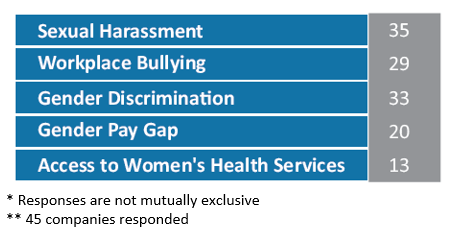
The risks associated with poor workforce management which fall under the ‘social’ and ‘governance’ aspects of ESG principles, must be considered and evaluated as part of the gender analysis. 62 percent of the companies stated that they incorporate ESG in their gender response process.
The following table represents the various gender-related rights impact and the number of companies which address each of them:
53 percent of the companies conduct completely anonymized employee surveys and other engagement mechanisms to specifically identify and address gender equality and women’s empowerment issues. All these companies also integrate employee feedback regarding gender issues into company policies and practices.
Gender Diversity and Workplace Representation
Gender Equality in the Workforce
Sixty-four percent of the companies collect sex-disaggregated data on their workforce by occupational function. And 42 percent not only engage in the collection, but also actively undertake data analysis and regular monitoring.
Proportion of Female Employees
More than half the companies have less than 15 percent women working for them (Figure 5). All such companies, however, intend to employ at least 15 percent women but have been unable to reach their respective targets. The chart below represents the percent of companies with the corresponding proportion of female workforce.

It is encouraging to find that 65 percent of the companies have set targets to increase the representation of women across various level of the workforce, with some companies aiming for a female workforce of more than 50 percent of the total workforce. The majority of companies surveyed intend to employ up to 35 percent women in their workforce.
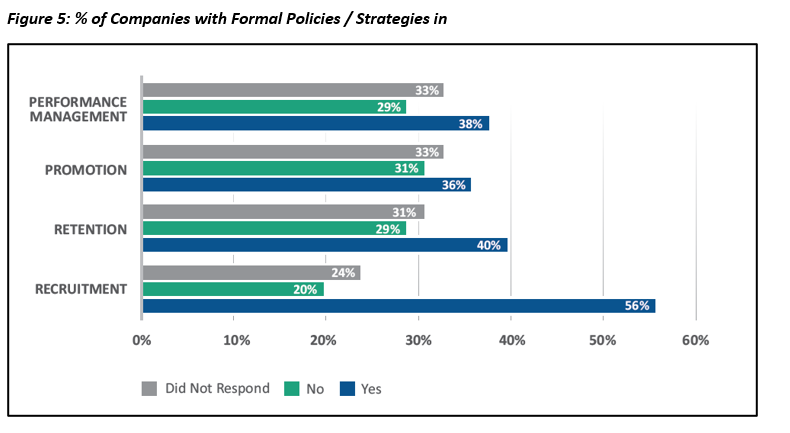
In order to effectively achieve targets pertaining to women’s employment and participation, companies need to implement effective and formal policies and/or strategies that support gender equality in recruitment, retention, promotion, and performance management. Figure 6 represents the percentage of companies with formal policies and/or strategies across these domains of employment.
Gender Equality in Leadership
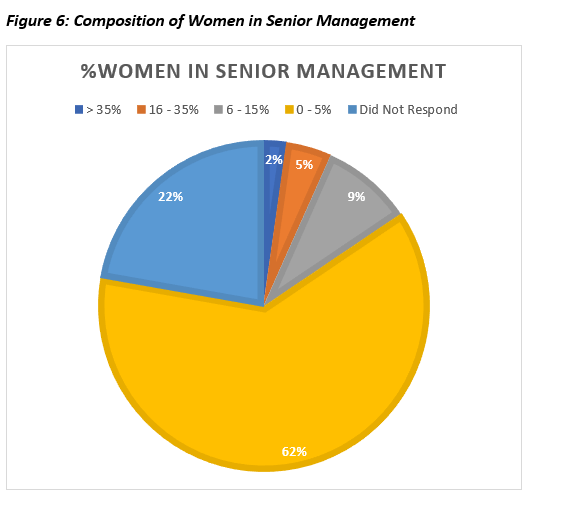
The figures for the proportion of women in leadership roles highlight persistent inequality, with 63 percent of companies having less than 5 percent of women in senior management positions (Figure 7). 60 percent of the companies have either none, or only one female member on their board of directors, highlighting the urgency for companies to reevaluate their practices on leadership training and promotion for women, and also for addressing social, cultural and workforce biases – conscious and unconscious – that impede women from realizing the same level of professional success as men.
Gender Pay Gap
Nearly 70 percent of the companies do not collect data on gender pay gap (Figure 8). Of the minority (30 percent) that do, 50 percent believe that no such gap exists within their organizations; and have not taken any action as a result of its gender pay gap analysis. Due to lack of evidence and small sample size, no conclusions can be drawn regarding the level of gender pay gap.
Companies that have not taken a gender pay gap analysis or collected sex-disaggregated pay data did demonstrate the willingness to undertake one. 60 percent of all participating companies stated that they have in place a formal policy and/or strategy on remuneration. However, only two companies (i.e., less than 5 percent) have the information publicly available. Pay equity objectives are included in formal policies for 31 percent of the companies who participated.

Optimal Workplace Culture
Parental Leave, Return to Work and Childcare Support
31 percent of the companies revealed that they have a formal policy and/or formal strategy to support employees with family or care responsibilities. Fundamental to formulating such policies is the need for relevant and accurate data. Figure 9 below represents the percentage of companies who collect sex-disaggregated data to assess the need for childcare support across different domains. As evident from the results, majority companies do not actively engage in this practice, highlighting the massive need for greater data collection to design informed decision on the needs of working parents with respect to childcare support.

66 percent of the companies responded when asked if they offered paid maternity leave, with 100 percent of those responding – doing so in the affirmative. 66 percent of those offering paid maternity leave did so in accordance with the law (Maternity and Paternity Leave Act 2019[1]), and 20 offered maternity benefits which were more generous than the law.
38 percent of the companies also offered paid paternity leave, of which 70 percent companies did so in accordance with the law (Maternity and Paternity Leave Act 2019), 24 percent were more generous than the law, and the remaining 6 percent were less generous. Additionally, 36 percent and 16 percent of the companies implemented concrete actions (excluding policies) to promote the uptake of maternity and paternity leaves, respectively.
Based on the results of the survey it was also found that over 20 percent of the companies monitored the return-to-work rate[2] of their employees after maternity leave, and 38 percent implemented concrete actions (beyond policies) that promote the return to work and retention of workers after maternity leave.
38 percent of the companies offer breastfeeding facilities and/or breastfeeding breaks to employees, and almost 30 percent offer internal support networks for women and working parents. Additionally, the following table lists different types of provisions (offered by the number of companies) as means of childcare support to employees:

Flexible Work
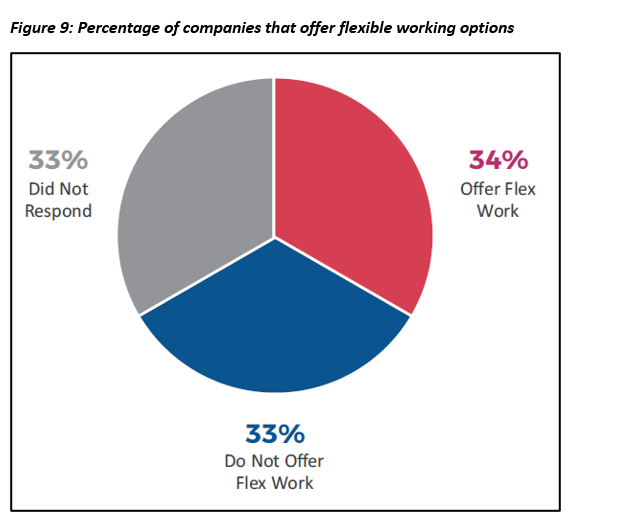
33 percent of the companies have a formal policy on flexible working arrangements (Figure 9). 33 percent of the companies offer flexible working hours (i.e., the ability to alter the start and end of the working day) to their employees, and almost 50 percent offer flexible work locations (i.e., the ability of work from home or telecommute). However, majority companies (that offer these provisions) only offer these provisions to full-time or permanent members of their staff.
Health and Well-being
58 percent of the companies offer their employees health insurance; 80 percent of the companies (offering health insurance) fully cover the cost, and the other 20 percent split the cost with employees. It is also important to note that only 4 percent of the companies who were surveyed responded that they do not provide health insurance, while 38 percent did not respond when asked if they offered health insurance to their employees.
Figure 10 projects the different services (and the number of companies) for which companies provide coverage.

Respectful Workplaces
More than half the companies (60 percent) have developed and implemented formal polices that address violence and harassment in the workplace, while seven percent of the companies do not have such policies. 55 percent provide mandatory training on bullying and sexual harassment as well as on unconscious bias (against female employees) to employees.
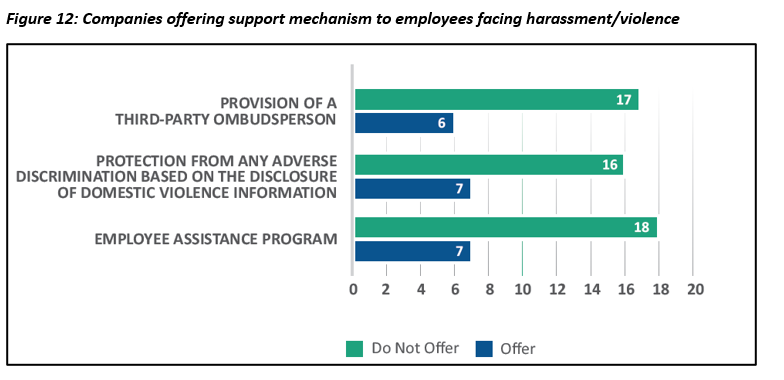
62 percent of participating companies have in place grievance mechanisms through which employees can report violence and harassment in the workplace. While many respondents collect sex-disaggregated data on the remediation of violence and harassment grievances as reflected in Figure 12, the absolute number is not very high. Measures to collect sex-disaggregated data are imperative for the design of effective remediation policies and measures.

Figure 12 projects the number of companies (in absolute terms) which have made certain support mechanisms readily available to support employees facing domestic violence.
Coaching and Mentoring for Female Employees
When asked to indicate if the company has an overall policy and/or strategy to develop a pipeline of women for leadership roles, 33 percent of the companies responded in the affirmative, and 22 percent responded by indicating that they had no such policy.
38 percent of the companies plan and conduct professional development and women leadership programs, and 27 percent have a formal mentorship/sponsorship program in place. 31 percent of the companies also have a high potential talent identification and development program for women.
Policy Recommendations
Recommendation 1: Pro-actively collect and disaggregate (organizational) data by gender
Disaggregating data based on gender, which is defined by the United Nations as “data collected and tabulated separately for women and men,” is critical to understanding how developing countries can help women living on the border between poverty and prosperity.[i] Research findings reveal a huge gap in organizational data that is collected and disaggregated by gender in Pakistan. For instance, data on gender pay gap, which is a major indicator of assessing gender parity globally, is missing. Similarly, two-thirds of the companies do not have mechanisms to collect gender-disaggregated data for working parents to assess the need for childcare support.
For private sector businesses, gender-disaggregated data is a necessity to build consumer-centric business strategies and enhance the company’s value proposition to investors, as well as specific market segments, including the women’s market. It allows for the recognition of customer segmentation and market opportunity, and addresses value-chain bottlenecks using gender-specific information.[ii]
Inclusive approaches to gender data collection and usage have been shown to yield greater revenues, as well as numerous other positive outcomes such as employee retention, and operational replicability and scalability. Furthermore, a number of existing studies have identified various avenues through which gender-disaggregated data can assist women in the workforce to overcome barriers to market access, financial inclusivity, and identification of prospective opportunities.
It is advisable for private sector companies to pro-actively collect and disclose disaggregated data to inform tailored solutions and formulate gender-specific evidence-based policies.
Recommendation 2: Engage in regular reporting and adopt disclosure practices
Corporate reporting initiatives are critical for generating meaningful and comparable data on workforce issues at scale. The adoption of disclosure practices complements the collection and analysis of gender-disaggregated data ( recommendation 1, above) as does the public reporting of data, steps that companies are taking to safeguard their workforce and supply chain relationships. Investors increasingly recognize that firms taking positive actions and publicly declaring gender equality practices are likely to be more resilient in the current crisis, and better equipped to succeed in the future. Private sector companies in Pakistan that actively engage in regular reporting can become more competitive by retaining talent and attract greater investment opportunities.
Findings revel that while 27 companies had developed or were in the process of developing strategies aimed at integrating gender equality into their business plans, only one company was able to share a publicly available link to their gender strategy plan. Similarly, almost 50 percent of the companies who responded, had never publicly disclosed specific targets on gender equality and women’s empowerment. And just over 50 percent have active engagement and reporting mechanisms in place targeted towards gender equality at the workplace. These findings highlight the need to better understand, and pro-actively address companies concerns around collecting and disclosing data.
Recommendation 3: Support women’s career progression
Findings revealed that while more than half the companies do have a formal policy and strategy to recruit women, only one-third of the companies have an active policy or strategy towards promoting women. More than half of the companies do not have formal mentorship or sponsorship programs that may better prepare women for leadership positions and roles. The absence of such strategies and programs is likely to be one of the reasons why more than two-thirds of the companies have either none or one woman as a member of the board of directors, and less than 5 percent of the company’s senior management as women.
Career progression is also linked with greater employee retention, and thus having a policy that promotes women serves a dual purpose. Having women in leadership positions is instrumental not only for ensuring better outcomes with respect to gender equality, but also for improved financial and operational gains,[iii] which greater diversity in leadership has been linked with.
Recommendation 4: Actively support flexible work arrangements for staff
The COVID-19 pandemic has highlighted the need for flexible work options. The need is amplified for women due to their disproportionate (unpaid) care responsibilities. As per the results of a COVID-19 survey (conducted by the South Asia Gender Innovation Lab), which covered urban areas, 83 percent of women reported that their share of household work (unpaid) increased after COVID-19.[iv] A larger share of women than men reported an increase in unpaid work regardless of employment status, but this gender gap was found to be the largest between working men and working women.[v] These findings point toward the double burden of work faced by working women.
In order to alleviate the extra responsibility of unpaid care work and to make the working ecosystem more conducive for women, private sector companies can consider the unique challenges that working women face and offer provisions such as flexible work options. These options can be offered to and benefit both men and women, flexible work arrangements should also be available to staff who are not parents. Results from the diagnostic reveal that only one-third of the companies have a formal policy of flexible (and partial) work arrangements, and/or offer flexible working hours (i.e., the ability to alter the start and end of the working day) or partial working hours (for example 80 percent instead of 100%) to their employees. In the wake of the pandemic, half the respondents did offer flexible work locations (i.e., the ability to work from home/telecommuting).
Disclaimer: The original report titled “Gender Diversity & Disclosure in Pakistan: Private Sector Landscape Analysis” was commissioned by the Pakistan Business Council and the International Finance Corporation, who hold ownership over the data collection and contents. The lead author the PBC-IFC report was Ahmed Nauraiz Rana (Economist, World Bank Group), who is also the Director of The Karakoram Initiative.
References
[1] World Bank. “In Pakistan, women’s representation in the workforce remains low.” 2021. https://blogs.worldbank.org/endpovertyinsouthasia/pakistan-womens-representation-workforce-remains-low
[2] Pakistan – Enterprise Survey 2013. https://datacatalog.worldbank.org/dataset/pakistan-enterprise-survey-2013-0
[3] World Bank. “Female Labor Force Participation: What Do We Know?” 2018. https://openknowledge.worldbank.org/handle/10986/30197
[4] World Bank. “Women at Work.” Policy Research Working Paper 8935. 2019. https://openknowledge.worldbank.org/bitstream/handle/10986/32055/WPS8935.pdf?sequence=6
[5] World Bank Group. “Women, Business and the Law 2021.” 2021. https://openknowledge.worldbank.org/bitstream/handle/10986/35094/9781464816529.pdf
[6] World Bank Group. “Gender Equality for Development.” Development Impact Evaluation. 2021. https://www.worldbank.org/en/research/dime/brief/dime-gender-program
[7] IMF. Women’s Empowerment and the IMF. 2019. https://www.imf.org/external/pubs/ft/gender/IMFWomensEmpowerment.pdf
[8] IFC. “Investing in Women: New Evidence for the Business Case.” 2017.
[9] World Economic Forum. Global Gender Gap Report. 2021. https://www.weforum.org/reports/global-gender-gap-report-2021
[10] UNDP Human Development Reports. Gender Inequality Index. http://hdr.undp.org/en/content/gender-inequality-index-gii
[11] World Development Indicators. FLFP, Pakistan. 2019. https://data.worldbank.org/indicator/SL.TLF.CACT.FE.ZS?locations=PK
[12] Pakistan – Enterprise Survey 2013. https://datacatalog.worldbank.org/dataset/pakistan-enterprise-survey-2013-0
[13] Ibid
[4] World Bank. “In Pakistan, women’s representation in the workforce remains low.” 2021. https://blogs.worldbank.org/endpovertyinsouthasia/pakistan-womens-representation-workforce-remains-low
[15] World Bank Group. “FLFP in Pakistan: What Do We Know?” 2018. https://documents1.worldbank.org/curated/en/444061529681884900/pdf/Female-labor-force-participation-in-Pakistan-what-do-we-know.pdf
[16] IFC. “Advancing Gender Diversity through Effective Anti-Harassment Mechanisms.” 2018. https://www.ifc.org/wps/wcm/connect/5b4b0fbd-737f-4145-ae05-ac1bea58579f/08918+IFC+Pakistan+HBL_FinalWeb.pdf?MOD=AJPERES&CVID=muzedtw
[17] Harvard Law School. “Corporate Disclosure of Human Capital Metrics.” 2017. Regular and voluntary social disclosure by a company can fill information gaps for customers, investors, and employees and, as a result, can have a positive effect on its revenues and build better access to human capital.
[18] UN Women. Women Count Pakistan. 2021. https://data.unwomen.org/country/pakistan
[19] IFC. “Gender-Smart Business Solutions.” 2019.
[20] United Nations Statistics Division. “Gender Statistics Manual – Integrating a Gender Perspective into Statistics.” https://unstats.un.org/unsd/ genderstatmanual/What-are-gender-stats.ashx
[21] FAO. 2019. “Sex-disaggregated data in agriculture and sustainable resource management: New approaches for data collection and analysis.” Rome. 2019. http://www.fao.org/3/i8930en/i8930en.pdf.
[22] IFC. “Women on Boards and in Business Leadership.” 2020. https://www.ifc.org/wps/wcm/connect/topics_ext_content/ifc_external_corporate_site/ifc+cg/topics/women+on+boards+and+in+business+leadership
[23] South Asia Gender Innovation Lab. “Impacts of COVID-19 on Labor Markets and Household Well-being in Pakistan.” 2021.
[24] Ibid.

