
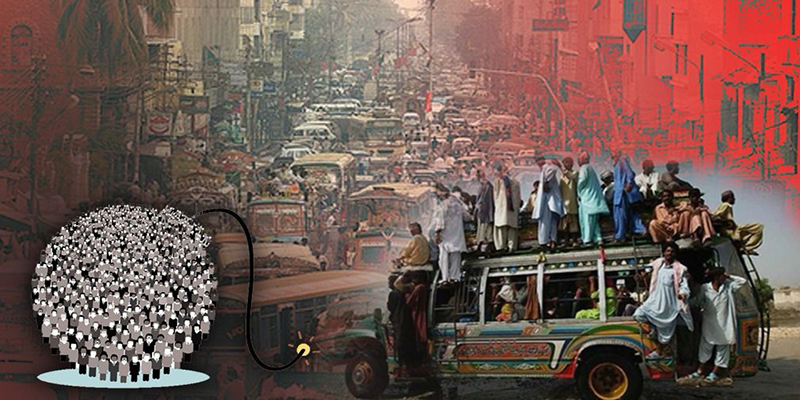
Pakistan’s population is currently estimated to be 240.5 million, growing at an annual rate of 1.98 percent. At this rate Pakistan’s population is projected to reach 400 million by 2050, which is likely to have severe implications for an already water scarce, food insecure, and economically vulnerable country. The level of human development as evident from indicators on health, education, and employment have made it glaringly obvious that Pakistan cannot realize the “demographic dividend”, one that enables a country to harness the promise of its population. If birth rates fall substantially, and young Pakistanis are properly educated and successfully absorbed into the labor force, the country can likely achieve economic and sustainable growth, boost social well-being, and realize prosperity. Once considered a significant asset, Pakistan’s population is now a leading and complex problem.
Surprisingly, Pakistan was able to evaluate the situation as early as the 1960s and became one of the first countries in the world, let alone in the region, to develop and launch a comprehensive family planning program. However, after almost six decades of investment in family planning, the decline in fertility rates has not kept up with its neighboring countries. At 3.47 children per women, Pakistan has one of the world’s highest fertility rates. Only 25 percent of women have been reported to have used modern contraception, and about 52 percent of married women of reproductive age (15–49) who want to avoid a pregnancy are not using a modern contraceptive method. These figures highlight the failure of the country’s population and family planning programs.
Pakistan has been falling behind the targets that it had set for itself in lowering fertility rates. According to Population Policy 2002 Pakistan envisioned to achieve replacement level fertility (i.e., the level of fertility at which a population exactly replaces itself from one generation to the next) by 2020. Then in 2012, at the London Summit on Family Planning, Pakistan pledged to achieve a contraceptive prevalence rate (CPR) level of 50 percent by 2020. But both goals remained unattained. The existence of unmet need for contraception (17 percent of married women) and continued persistence of inequity among users reported by 2017- 18 Pakistan Demographic and Health Survey (PDHS) – reflected by the difference in the use of modern contraceptives between poor and rich segments of married women (13-point difference) points to weaknesses in service delivery. If all unmet need for modern contraception were met, there would be 3.1 million fewer unintended pregnancies annually, 2.1 million fewer induced abortions and nearly 1,000 fewer maternal deaths.
Delving further, several issues and missed opportunities can be noted for the low uptake of family planning in Pakistan including but not limited to lack of political buy-in and endorsement, institutional fragmentation and lack of coordination, lack of private sector involvement, failure to mobilize and leverage NGOs and rural communities, and lack of evaluative mechanisms to reform and redesign interventions. At the core of these issues is ineffective management. The challenge with effective management is further exacerbated by administrative constraints, decentralization, and at the individual level is amplified by the dearth of technical experts in decision and policymaking, and the presence of technically inept and non-productive officials.
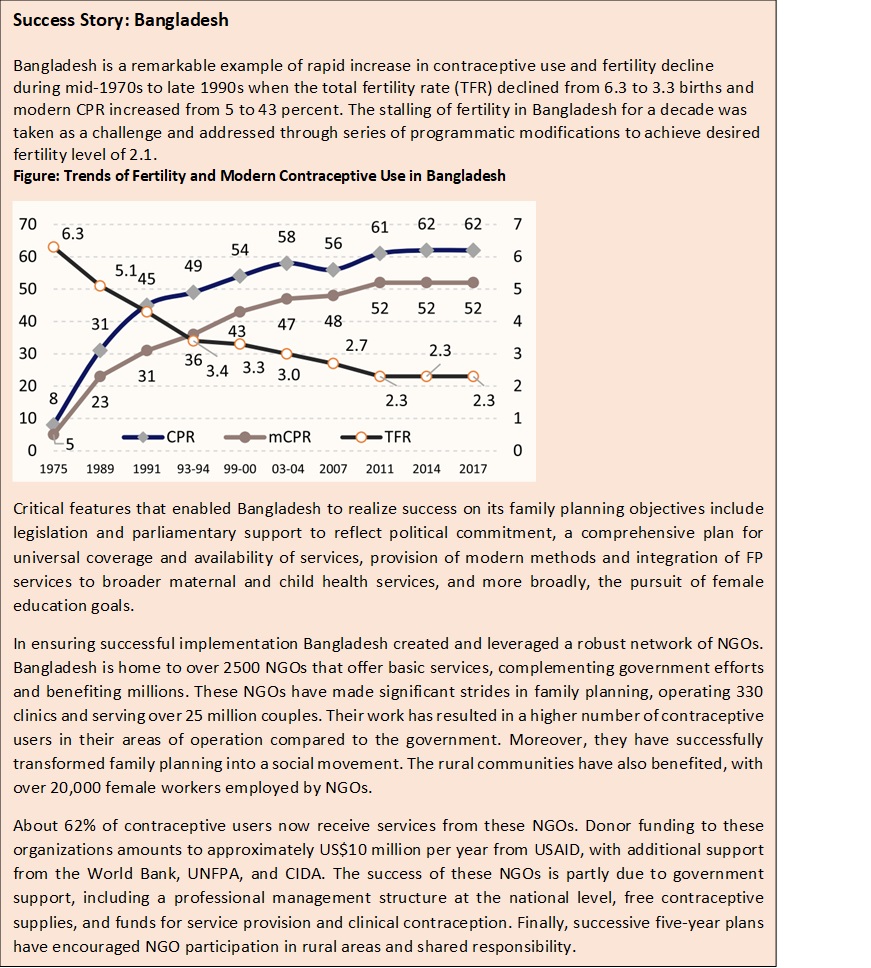
In order to address the problem of rising population growth rate, it is an imperative to ensure expanded coverage of population planning services to the rural areas with a direct chain of operations that runs through district and community level NGOs. It is also important to leverage these NGOs for advocacy purposes as was done in Bangladesh (see Case Study), and effectively mobilize rural communities. Furthermore, it is equally important to incentivize the private sector to participate as stakeholders. All such interventions are contingent upon a well-functioning government entity – the design and operational framework of which is key for ensuring long-term and sustained success.
The team of experts at the Karakoram Initiative, henceforth, propose the Pakistan Population Vision. It proposes the establishment of a Population Planning Board – an autonomous body – which reports directly to the country’s Prime Minister. Additionally, a detailed management and an operational strategy is enclosed which includes financial and budgetary models, project deliverables, objectives, and timelines. The management and operational strategy aim to streamline the process that will enable Pakistan to address existing barriers that have hampered population control (detailed under section ‘Causes of Failure) and achieve the goal to decrease fertility rates by 2030.
Introduction
Pakistan, in 2023, finds itself amidst a polycrisis, evident from its faltering economy, climate-induced disruptions, food and water scarcity, political polarization and more; all of which may be categorized as symptoms of profound structural deficiencies and long-persisting underlying issues. One such underlying issue is that of population – the growth rate of which has seen an unprecedented increase over the last five decades, causing the country to reach an estimated 403 million people by 2050.[1]
Closely related is the problem of rapid urbanization, fueled by high birth rate, and internal migration. The share of Pakistan’s urban population has increased from 22 percent in 1960 to almost 40 percent in 2022 (Figure 1).[2] Coupled with limited infrastructure and developmental resources (to cope with such growth and influx), rapid urbanization has led to the propagation of myriad issues related to health, environmental pollution, security, and more.
Here, it is important to acknowledge that economic development leads to structural transformation: decline in the share of agricultural sector and an increase in that of non-agricultural sectors, spurring the movement from rural to urban centers. In the case of Pakistan, however, rural-urban migration is further likely to accelerate in the coming years as the impact of global warming, water scarcity, food insecurity, access to markets, etc. become more profound pushing those in the worst affected rural areas to migrate to the cities. This scenario is likely to exert even greater pressure on urban centers which are already grappling with the rapid increase in population.
On the economic front, the country continues to accumulate external and internal debt – year on year – which currently stands at almost $234 billion, amounting to almost 76 percent of the country’s gross domestic product (GDP).[3] Such high levels of debt, further layered into debt servicing and interest repayment tend to crowd out the fiscal space and room for investment in human capital such as health, and education. Evidently, Pakistan has the world’s second-highest number of out-of-school children (OOSC) with an estimated 22.8 million children aged between 5 and 16 not attending school, representing 44 percent of the total population in this age group.[4] Similarly, the state of health infrastructure can well be gauged by the fact that Pakistani hospitals have only six hospital beds per 10,000 people. The doctor-to-patient ratio, too, is extremely low, with one doctor for every 1300 people.[5]
Figure 1: Urban population (% of total population) – Pakistan

The country, which has been flirting with the prospects of default on sovereign debt with foreign reserves dropping down to as little as $3 billion during the first quarter of 2023, has, and continues to undergo periods of unprecedented inflation rising as far as 48 percent, impacting the food-basket even more intensely. When macro structures of a country’s economy tend to break down, the impact is felt across all sectors of the economy, including private businesses which are the drivers of job creation. Unsurprisingly, Pakistan’s labor market continues to suffer as the country experiences a gradual but continuous increase in its unemployment rate with projections indicating that the number of unemployed will likely reach 6 million by the mid-2024.[6]
The state of Pakistan’s faltering economy is such that it has led to an additional 20 million people being pushed below the poverty line in just over two years, with the total residing in poverty amounting to 39.4 percent of the country’s population. The poverty landscape is only exacerbated by the population growth which is dismantling the infrastructure and ability to invest in human capital and for the country attain sustainable economy growth.
Like poverty, many of these issues, both economic and social, are amplified considering the country’s population. Once a significant asset, Pakistan’s population is now a leading and complex challenge to address. While Pakistan’s current growth (population) rate outpaces some of its regional peers, the country’s quality of life indicators fall behind those of other developing nations. With a score of 0.544, Pakistan ranks 161st out of 192 countries on the United Nations’ Human Development Index (HDI).[7] While not the only reason, research findings do attribute the population boom to issues such as child labor, crime and unrest, unemployment, and scarcity of public services. Despite multiple attempts to solve this problem, administrative constraints, lack of decentralization, executionary unprofessionalism, and the presence of technically inept officials have hindered progress.
However, there are ways to end this cycle of failure and control Pakistan’s population growth. Important steps include expanding coverage of population planning services to rural areas through district and community-level NGOs, mobilizing rural communities, utilizing district-level NGOs to advocate for population programs, and involving the private sector as partners in population planning activities. By implementing these solutions, Pakistan can begin to address the challenges posed by its growing population and improve the quality of life for its citizens.
Eventually, if birth rates fall substantially, and young Pakistanis are properly educated and successfully absorbed into the labor force, the country can realize a “demographic dividend” that sparks economic growth, boosts social well-being, and sets itself on the path to shared prosperity.
Current Landscape
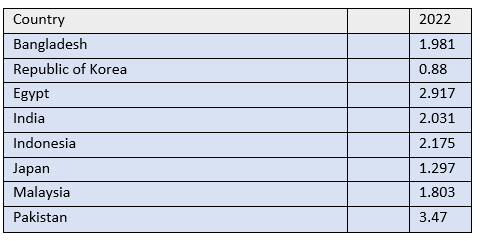
Pakistan is the fifth most populous country in the world[8] with around 240.5 million people and an annual population growth rate of 1.98%[9] as of 2023. This growth rate is much higher than that of even India (0.8%) and China (0.1%) – Pakistan’s regional comparators and two of the most populous countries in the world – highlighting the gravity of the problem and Pakistan’s failure to formulate and implement a policy to ensure sustainable and controlled rate of population growth. At this rate, the country’s population will double in nearly 38 years. Furthermore, it is pertinent to highlight Pakistan’s fertility rate – which at 3.47 children per women – is again, one of the highest in the world.
Table 1: Total fertility rate (live births per woman)
Source: United Nations, Department of Economic and Social Affairs, Population Division (2022). World Population Prospects 2022, Online Edition.
Pakistan has made significant investments in financial, human, and infrastructure resources over the years. The decline in fertility rate, however, has not kept up with its neighboring countries. Bangladesh, for example, had a comparable fertility rate 40 years ago, but has since made significant progress in managing birth rates. As of 2021, Pakistan still struggles to bring fertility rates to under 2 per woman.
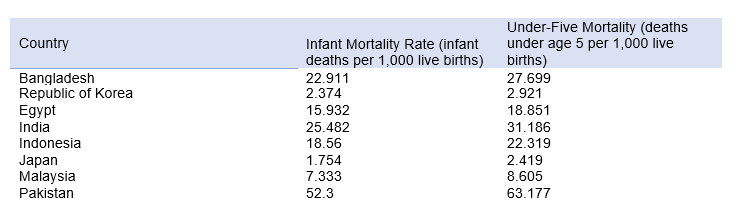
Table 2: Country Comparison: Rate of Infant Mortality
Source: United Nations, Department of Economic and Social Affairs, Population Division (2022). World Population Prospects 2022, Online Edition.
Pakistan’s high birth rate coupled with inadequate healthcare facilities has led to one of South Asia’s highest infant mortality rates, which too, is a serious concern. To compound the issue, the country’s rampant malnutrition results in stunted and wasted children. This situation can have long-term consequences for the nation, including reduced productivity, increased healthcare costs, and social unrest.
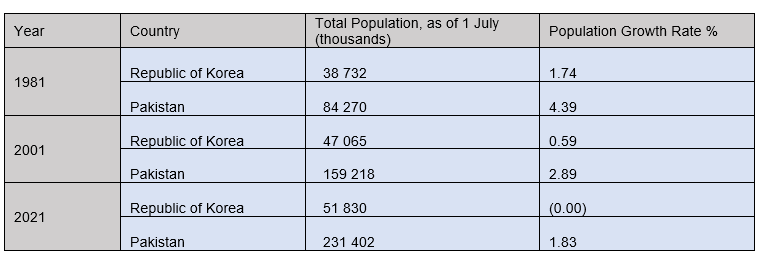
On the contrary, South Korea, a nation only two years older than Pakistan, has achieved remarkable success in managing its population growth and realizing unprecedented economic growth as evident from the increase in per capita income from $1883 in 1981 to $34,998 in 2021 (Table 3). Despite experiencing a baby boom in the 1950s, South Korea implemented effective population control measures while rapidly industrializing, resulting in significant improvements in the country’s socioeconomic indicators. This success serves as an example of how pragmatic population management can lead to positive long-term consequences for a nation.
Table 3: Per capita income – Pakistan, South Korea

Source: United Nations, Department of Economic and Social Affairs, Population Division (2022). World Population Prospects 2022, Online Edition.
Table 4: 40-year population growth comparison: Pakistan vs South Korean
Source: United Nations, Department of Economic and Social Affairs, Population Division (2022). World Population Prospects 2022, Online Edition.
Figure 2: Population distribution pyramid for Men and Women, 2023
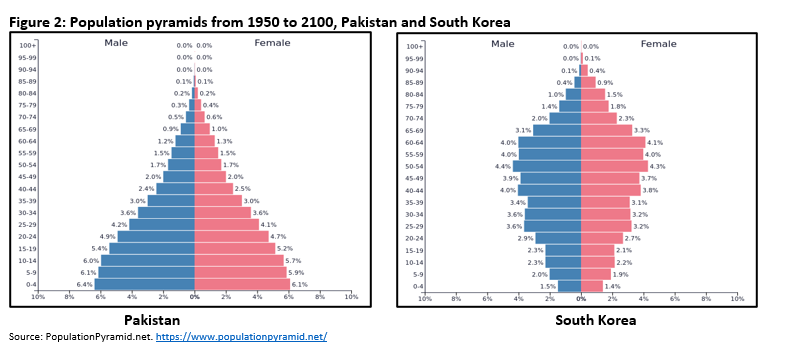
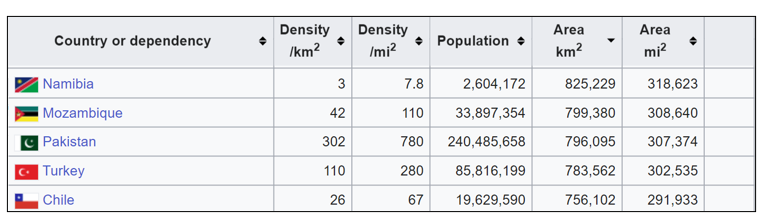
Delving further it can be seen that Pakistan’s populations density at 302.08 (2023)[10] inhabitants per square kilometer is by far one of the highest in comparison to countries which have approximately the same landmass. In 2020, Pakistan’s population density was 285.39/km2 projecting an increase of 5.84 percent of the course of three years – an unprecedented and unsustainable increase.[11]
Table 5: Population density (Pakistan and select countries)
The Case for Population Control
Over the course of many decades, dating as back as the 1960s, economists have taken different positions on the implications of population dynamics for economic growth, sustainable development, and poverty reduction. This is partly because earlier literature argued that lowering fertility was largely irrelevant (or even counter-productive) to developing countries’ prospects for economic growth and poverty reduction. However, as analytical techniques have evolved and data has become more readily available, broader consensus has been realized: while policy and institutional settings are key in shaping the prospects of economic growth and poverty reduction, the rate of population growth also matters.[12]
Recent studies and economic models find that low dependency ratios (i.e., proportion of children to working-age adults), as fertility declines, create an opportunity for increasing productivity, savings, and investment in future growth. They find that lower fertility is associated with better child health and schooling, and better health and greater labor-force participation for women. Micro-studies have also found that a lower fertility rate helps reduce poverty at household level in developing countries. Some of this demographic dividend is automatic, arising simply from increasing the resources per capita for services, infrastructure, and livelihoods.
For instance, the rapid economic growth across East Asia was facilitated by the rapid decline in fertility rate which reduced the dependency ratio i.e., “if a population has a high proportion of children to working-age adults ― typical of populations with high fertility ― the prospects for economic growth are diminished.”[13]In Bangladesh, improvements in women’s health, household earnings and assets, use of preventive health inputs, and children’s health and schooling were found to have been associated with fertility decline.[14] In Colombia, the family planning program was found to bring substantial socio-economic gains to women, especially if they had access to the program when young. Such women obtained more schooling and were more likely to work in the formal sector.
Conversely, these studies indicate that rapid population growth can constrain economic growth, especially in low-income countries with poor policy environments. Population growth also exacerbates pressure on environment-common property resources, i.e., the resources which can be freely consumed or enjoyed by anyone, but their use by one person diminishes their availability to others. Studies highlight the deep challenges to aligning divergent interests for managing these resources. However, part of the pressure on these resources can be mitigated by reducing the rate of population growth.
As the World Bank ascertains, food demand is rising with growth in incomes as well as in population size.[15] As per the national nutrition survey 2018, 36.9 percent of Pakistan’s population faces food insecurity.[16] Climate change will make it harder to meet that food demand. A huge increase in productivity will be needed, in tandem with an increase in regulation to protect natural systems, however, population size is amenable to policy and can alleviate the pressure on the adjustments required on various other fronts to address food insecurity in Pakistan.
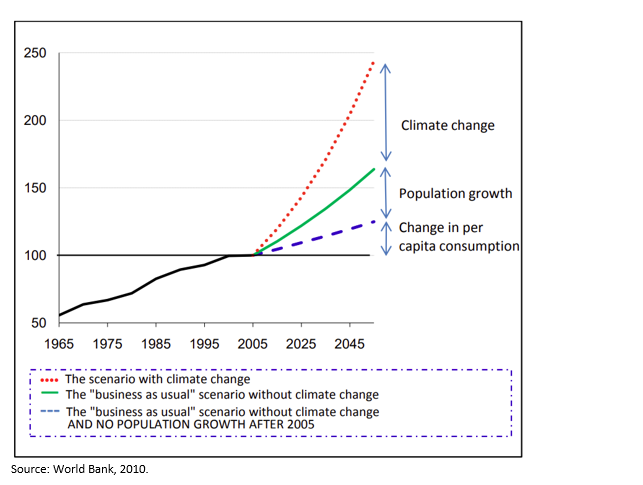
Models vary, but it is estimated that to meet the growing demand for food between 2005 and 2055, agricultural productivity will need to rise by 64 percent under the assumptions of the “business as usual” scenario and by a further 80 percent under the assumptions of projected stresses arising from climate change (Figure 3). Yet the model indicates that if population had remained constant at the 2005 level, agricultural productivity would have only needed to rise by 25 percent under the “business as usual” scenario. This highlights that more of the required productivity increase under the “business as usual” scenario is necessitated by population growth than by increases in per capita consumption.[17]
Figure 3: Required growth in agricultural productivity factoring in climate change and population growth
Similarly, Pakistan is considered one of the most critically water insecure country. Fresh water sources are becoming scarce, leaving millions of people without access to clean and safe drinking water. Simultaneously it is grappling with fast-growing population and is being exposed to drought conditions faster than the pace at which it can develop the necessary infrastructure to deal with such conditions. Controlling the rate of population growth becomes a life-saving imperative. Furthermore, with the GDP growth stagnating in 2023[18], Pakistan’s overpopulation problem could lead to a dramatic fall in per capita income, adversely impact the standard of living, and push people closer to or below the poverty line, as evident from the 12.5 million additional people who were pushed below the poverty line during the year 2023.
A quick snapshot comparing the figures for 1980, and 2023 highlight the double down impact on education and health, stemming from lack of resources and investment in human capital, as well as the increase in population – further shrinking the per capita resource allocation pool. For instance, in1980, 1,084 children per primary school were enrolled in Pakistan. Today, this figure has risen to 1,500. Likewise for secondary schools, the number of students people per middle school was 14,161 in the 1980, but now stands at over 50,000. The situation is even more harrowing for high schools, where in 1980, the number of students per high school was 17,833 but has now increased to 68,413. Similarly, based on available figures, it can be seen that the number of hospital beds per 10000 people is staggeringly low at 6.3 – one of the lowest in the world. The population growth rate has the effect of a negative multiplier deterring prospects of prosperity.
At the time of its independence, Pakistan’s population was merely 32.5 million[19], and its population density 40.82/km2. The rapid growth, marked by almost 7 times increase since the country’s inception has exacerbated resource and space depletion, poverty, and unemployment. At the current growth rate of approximately 2 percent, 5 million children will be given birth each year in Pakistan. This is a tall order for a country that already severely lacks in resources to invest in human capital – as evident from the 39 percent of children in the school-going age group out of school, and 37.7 percent of children reported to having stunted growth.
Coupled with the current economic scenario according to which Pakistan’s external financing requirements are estimated at $72 billion for fiscal years 2025 to 2027, with a minimum of $25 billion needed in the current fiscal year, and interest payments, alone, soaking up the bulk of Pakistan’s revenue, it leaves little room for investment in areas that are the key drivers of human development (health, education, social protection, and more) manifesting a state of constant paralysis.
The needs and realities for a resource constraint developing country like Pakistan are very different from those of a developed country with respect to population growth. Given Pakistan’s situation, the government must acknowledge overpopulation as an existential threat and implement pragmatic population control measures, including increasing contraceptive prevalence, engaging with religious scholars where necessary, increasing literacy and women’s education, and creating opportunities for youth in national outlook.
Population Control Mechanisms – Existing Policies and Infrastructure
Rapid increase in population and the rate of population growth has several implications for the socioeconomic development of the country. As one of the few pioneer countries, Pakistan visualized this situation in the 60s and took a policy decision to address the population issue by introducing voluntary family planning services in the country. However, with over five decades of investment in family planning program, only 25 percent of women reported using modern contraception in 2017-18 – the lowest among Asian and neighboring Muslim countries.[20] This current situation merits analyzing the cause of policy and implementation failure to control that rate of population growth, and the challenges in realizing the desired outcome as evidenced by the low contraceptive prevalence rate (CPR) currently at 30 percent, and high rate of unmet need for family planning, currently at 25 percent.[21]
Existing Infrastructure
Pakistan was one of the first country to launch the population planning /family planning initiative in the Southeast and this was done in recognition of the country’s rapidly increasing population growth rate, that was rightly forecasted to impact economic growth and human development. Several initiatives were put in place to promote and institutionalize population planning though family planning initiatives focusing on advocacy, service delivery, use of contraceptives, social marketing, community engagement programs, and more.
In 1965, Pakistan launched its Family Planning Program, making it one of the pioneers in the field. The Population Welfare Program, in the words of the now-devolved Population Welfare Ministry that oversaw it, aimed to bring about “social and economic development through rational choices about family size and reproductive behavior.” The functions of the Population Welfare Ministry included planning and developing policies, as well as monitoring and evaluating program activities.
After the 18th amendment to the constitution, the Federal Ministry of Population Welfare was dissolved, and the Population Welfare Program was devolved to the provinces in 2010: population and health became provincial subjects. The functions of the Population Welfare Ministry were transferred completely to provincial departments of population welfare, while some overall national-level planning functions were given to the Planning Commission, and data collection to the Federal Bureau of Statistics. Such an arrangement led to the fragmentation of the institutional structures which govern and are responsible for policy making and implementation of population control measures. Even prior to the devolution, the Ministry and its provincial health departments had not been successful in delivering on their objectives.
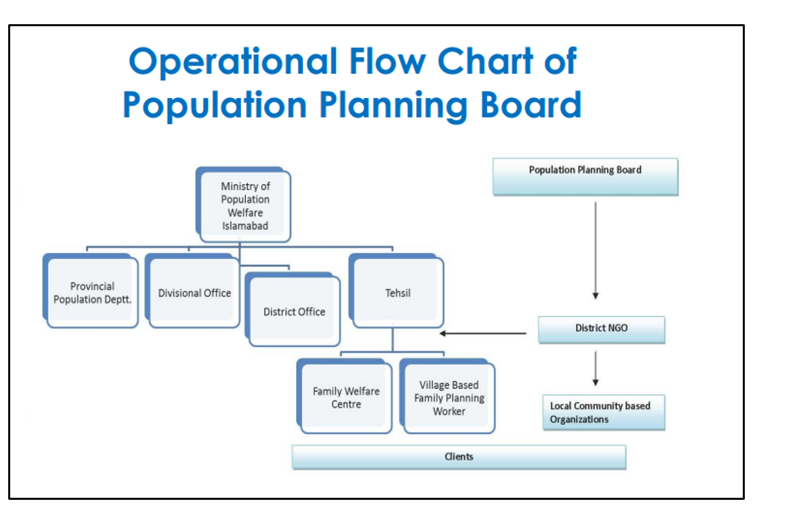
Since 2013, the Ministry of National Health Services Regulation and Coordination has been responsible for managing and coordinating provincial population welfare programs. The National Institute of Population Studies, the National Research Institute of Fertility Control, and the National Trust for Population Welfare are some of the national-level institutions working to resolve the problem associated with population growth. The provincial setup includes directorate setups, district setups, family health clinics, family welfare centers, mobile service units, population welfare training institutes, men advisory centers, family welfare centers, static health delivery centers, reproductive health service centers, lady health workers, and community mobilizers. These entities are responsible for executing and implementing the population welfare program within the provincial policy framework and in accordance with the government’s policy.
Table 6: Provincial structure of government entities working on population control, 2013
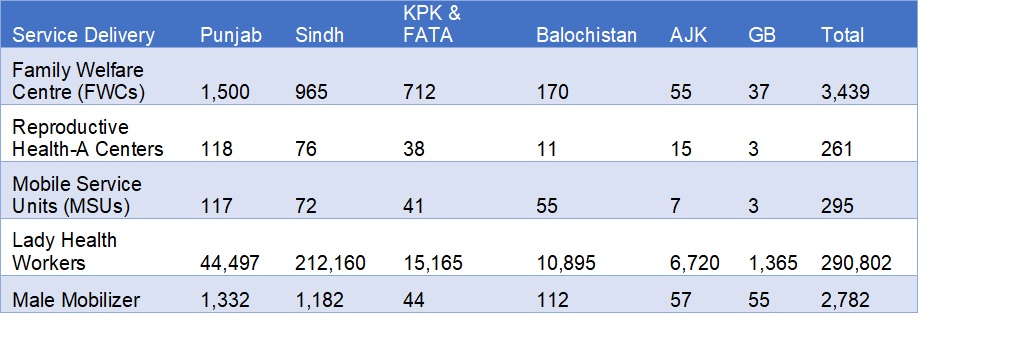
Table 7: SDP Allocation on Population Program, 2013

Pakistan’s Family Planning (FP) 2030 Commitments
Taking a step forward, the FP2030 vision was conceived to build on the progress made, learn from the lessons learned and accelerate progress towards meeting the family planning, and sexual and reproductive health indicators. As a member of the global family planning community and a signatory to FP commitments, Pakistan has aligned and integrated its FP 2030 commitments with its national objectives as agreed upon under the composite coverage index (CCI) recommendations and the targets specified in the National Action Plan. FP2030 explicitly states “by the end of 2030, Pakistan envisions a society where women and girls are empowered and all couples enjoy basic rights to decide the number of their children freely and responsibly by maintaining a balance (tawazun) between their family size and resources, make informed choices to achieve a prosperous, healthy, and educated society.”[22]
The country aims to prioritize family planning by focusing on nine crucial areas as per FP 2030.[23]
- Adapt and implement evidence-based progressive policy reforms with political will and enabling environment at all levels.
- Universal access to services to lower fertility rates and address unmet need for contraception.
- Addressing information and service needs especially across remote areas.
- Gearing for uniform understanding of National Narrative.
- Contraceptive commodity security and efficient supply mechanisms.
- Legislative support.
- Institutionalization of human development and system strengthening to sustain family planning efforts.
- Monitoring and evaluation for results and effectiveness.
- Mobilizing funds and allocations for family planning and reproductive health activities.
Pakistan had also made a pledge to attain universal reproductive health coverage and increase the contraceptive prevalence rate (CPR) to 50 percent by 2020. Yet, the CPR has remained stagnant at 30-35 percent[24], and the progress toward the other objectives of FP 2030 has also fallen behind the timeline[25].
Causes of Failure in Achieving the Desired Results
With family planning program in place, Pakistan aimed to achieve replacement level fertility (2.2 births per woman) by 2030. Fertility declined steadily from 4.9 births per woman (1990-91 PDHS) to 4.1 births (2006-07 PDHS) and to 3.6 births (2017- 18 PDHS). However, it still remains much higher than its regional comparators.[26] Surveys also reveal that fertility decline generally remained slow after 2006.
According to Population Policy 2002 Pakistan envisioned to achieve replacement level fertility by 2020. Pakistan pledged at the 2012 London Summit on Family Planning to achieve a CPR level of 50 percent by 2020.[27] But both the goals remained unattained. The existence of unmet need for contraception (17% of married women) and continued persistence of inequity among users reported by 2017- 18 Population Demographic and Health Survey (PDHS) reflected by the difference in the use of modern contraceptives between poor and rich segments of married women (13-point difference) points to weaknesses in the service delivery system.[28] Pakistan falling behind to achieve its own goals set for lowering fertility reflects inadequate investment and attention to raise contraceptive use rate.
Several major issues and missed opportunities may be noted for low uptake of family planning in Pakistan which include but are not limited to:
- Lack of political buy-in: Rapid population growth though accepted as a barrier to development, has never been discussed openly and freely in the parliaments or in public spheres. Legislation, too, has not evolved in accordance with sociological and demographic changes. Furthermore, lack of ownership by the leadership in endorsing the cause and establishing open support for sustained efforts has marred the desired long-term gains. Many of the political leaders and program managers have been witnessed to demonstrate limited understanding and the patience necessary to pursue the cause of population on a sustained basis. The gap in public and political dialogue has time again enabled conservative (and religious) forces to hijack the narrative and establish confusion and fear among the masses.
- Gaps in service delivery: Service delivery and counseling at community level has faltered, especially since the 2000s according to on the ground research findings by United Nations Population Fund (UNFPA). Counseling women and ensuring that they have access to family planning information, tools, contraception did not receive adequate attention especially after the dilution of the tasks of Lady Health Workers (LHW) post 1999 in support of other health programs. Lessons from Turkey, Iran and Bangladesh highlight the critical role of counseling women which helped educate and encourage clients, and address fears and myths of family planning and contraceptive technology. Furthermore, the delivery of family planning services by the Population Welfare and Department of Health (solely and together) did not fully meet the needs of the people mainly because of the silo approach that was employed, and lack of coordination and collaboration. Quality of service monitoring, and beneficiary feedback remained secondary and lacked intensity. Additionally, the private sector, which comprises of NGO facilities, pharmacies, hospital clinics and dispensaries was not utilized.
- Institutional fragmentation and lack of coordination: The devolution of the Federal Ministry of Population Welfare to the provinces has perpetuated challenges with inter-provincial coordination. There has been acute failure in ensuring that national level policies are realized homogenously. The devolution of functions in 2010 diluted the national cause and rather than improvement has caused more harm. The spirit of devolution in terms of building capacity and authorizing districts for planning, action and accountability has failed to materialize. Merger of the two Ministries – Population Welfare and Department of Health – have been the agenda of several governments since year 2000 but it remained a difficult proposition because of the differences in sources of funding, hierarchical relationships, constitutional prerogatives, and reluctance on part of functionaries.
- Lack of evaluation mechanisms and iterative research: Performance Evaluation and Research was a Program pillar but did not receive adequate political or institutional support to address and analyze substantive field programs. Inadequate support to the pillar led to decay of research institutions in terms of research capacity and its contribution to the sector. Additionally, the role of the state towards ‘policy review’ and ‘regulatory tasks’ remained non-existent at federal and provincial levels. Good understanding and developing improved assessment of progress and coordination with partners are critical for effectively and efficiently realizing the set targets, however, these elements were and continue to be largely missing.
Suggested Solution for Pakistan
It is estimated that each year in Pakistan there are 3.8 million unintended pregnancies, which likely happen due to unmet need for modern contraception.[29] It is further estimated that 52 percent of all married women of reproductive age (i.e., between 15 and 49) who want to avoid a pregnancy are not using modern contraceptive methods,[30] either due to inaccessibility, lack of information, or social norms. This highlights the government’s failure to create robust mechanisms both in terms of supply chain as well as education and information.
Therefore, at the very core of Pakistan’s failure to rightly deliver on its population planning program and related goals is ineffective management. This challenge with effective management is further exacerbated by administrative constraints, decentralization, lack of institutional oversight and coordination, and at the individual level is amplified due to lack of technical experts in decision and policymaking, and the presence of deadwood officials.
To capture the demographic dividend, Pakistan needs new policy directions. Ensuring a rapid fertility transition by strengthening the quality of family planning programs is a necessary condition. Additionally, a policy intended to achieve long-term reduction in population growth must broaden its scope to include intersectoral issues. The two most closely related sectors are gender and education: girls and women must be the focus of attention because gender inequities will hamper progress in education and employment. Finally, population policy is dependent on improvements in the education system, because success or failure in education and the creation of favorable demographic trends are intertwined with prospects of a dividend.
The solution to addressing Pakistan’s high population growth rate can be classified into two sets of interventions: (i) working on and achieving broader developmental goals, (ii) effective management and targeting the uptake of modern contraceptive techniques.
Achieving Development-oriented Objectives
Education and Empowerment of Women: Educating women and providing them with opportunities for employment and empowerment has been shown to correlate with lower fertility rates. According to a report by the United Nations Population Fund (UNFPA), educating girls and providing access to reproductive healthcare can significantly reduce fertility rates. Investments in education for girls can lead to delayed marriages and fewer children per woman, thus slowing down population growth.[31]
Healthcare Infrastructure and Services: Strengthening healthcare infrastructure and services, particularly in rural areas where access to healthcare is limited, is essential. This includes increasing the number of healthcare facilities, trained healthcare professionals, and outreach programs focusing on maternal and child health. Improving maternal and child health not only reduces infant mortality but also encourages families to have fewer children as they become more confident in the survival of their offspring.[32]
Poverty Alleviation and Economic Development: Poverty often correlates with higher fertility rates as families may perceive more children as a means of economic security or labor contribution. Implementing poverty alleviation programs and promoting economic development can help break this cycle. Creating job opportunities, providing vocational training, and supporting small-scale entrepreneurship can empower families economically and reduce their reliance on large family sizes[33].
Legal and Policy Reforms: Enacting and enforcing policies that support family planning, maternal healthcare, and women’s rights are crucial. This may include legislation to ensure equal rights for women, prohibit child marriages, and promote gender equality in education and employment[34]. Additionally, the government should allocate sufficient resources to implement existing policies effectively.
Effective Management and Improved Service Delivery
Access to Family Planning Services: Ensuring easy access to contraceptives and family planning services is crucial. According to the Pakistan Demographic and Health Survey (PDHS), conducted in 2017-2018, the contraceptive prevalence rate in Pakistan is only around 35%, indicating a significant gap in access to family planning services[35]. Government and non-governmental organizations need to work together to improve access to contraceptives, provide comprehensive family planning education, and dispel myths and misconceptions surrounding contraception.
Public Awareness Campaigns: Launching public awareness campaigns on the importance of family planning, reproductive health, and the benefits of smaller family sizes can help change cultural norms and attitudes towards family planning. These campaigns should target both rural and urban populations and utilize various mediums such as television, radio, community events, and religious institutions to reach a wide audience[36].
In order to address the problem of rising population growth rate, it is imperative to ensure expended coverage of population planning services to the rural areas with a direct chain of operations that runs through district and community level NGOs. It is also important to leverage these NGOs for advocacy purposes as was done in Bangladesh, and effectively mobilize rural communities. Furthermore, it is equally important to incentivize the private sector to participate as stakeholders. All such interventions are contingent upon a well-functioning government entity – the design and operational framework of which is key for ensuring long-term and sustained success.
The first step is to review the current policy and guidelines, identifying the bottlenecks faced by the development sector, and national and international NGOs working in Pakistan. The reform policy needs to support the NGOs and the broader development sector, similar to how the government of Bangladesh did: providing a conducive platform where the NGOs and donor would register and channel funds to the local NGOs in line with the Health and Population Ministry guidelines for health and family planning.
Second, is the creation of an entity that represents sufficient support for mobilizing the private sector to participate in population welfare initiatives and is able to mobilize the development sector through NGO by providing grants to launch population welfare initiatives. Prior to the launch it is imperative to ensure the ‘buy-in’ of the four provinces so that the initiatives can be mobilized at earliest.
The team of experts at the Karakoram Initiative, henceforth, purpose the Pakistan Population Vision.
Pakistan Vision 2025 and Proposed Actions
The Vision for Pakistan aims to complement the government’s efforts to reduce the annual population growth rate and provide universal access to healthcare services and information, particularly in rural areas. Provinces are taking the lead on family planning in the post-devolution scenario, with the Federal government assuming the role of coordination. Translated into approved policies for Sindh, Baluchistan, KP, and Punjab, costed implementation plans are being developed. Priorities include but are not limited to:
- strong political commitment,
- support for implementation plans,
- establishing public-private partnerships and alternative funding sources,
- increased advocacy with a focus on youth outreach and inclusion, include encouraging girls’ education, delaying age at marriage and first birth, and
- capacity building and training for family planning service providers and LHWs.
Establish a Population Planning Board in the Prime Minister’s Office which directly reports the Prime Minister
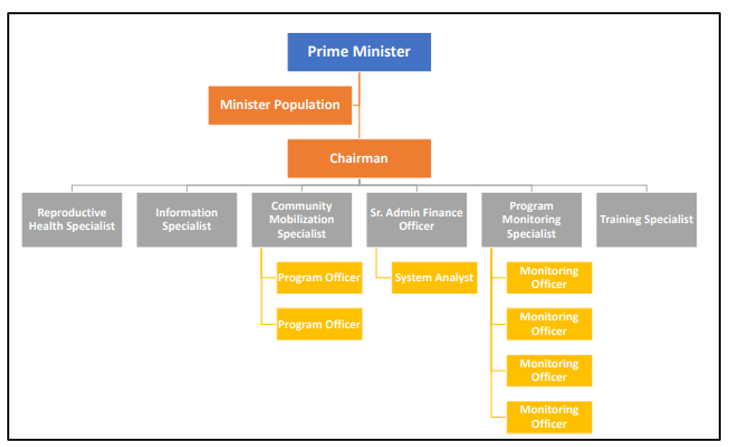
One of the key barriers arise due to institutional fragmentation and political commitment which hampers service delivery and deters strategic interventions. The proposed solution involves the establishment of a Population Planning Board – an autonomous body that reports directly the Prime Minister.
In 2010, post the 18th amendment in the constitution, the Ministry of Population Welfare ceased to exist, and its functions were devolved to the provinces under Population Welfare Departments. Since then, the mandate of population control came to fall under the jurisdiction of the provincial governments which, while having certain upsides in terms of administrative oversight, has perpetuated and furthered various inefficiencies owing to capacity constraints, limited direction at the national level, lack of harmony and homogenization in the implementation of population-related programmatic interventions, and more.
Rather than reverting to the pre-18th amendment structure, which too had minimum success, it is advisable to formulate an umbrella body “Population Planning Board” in parallel to the provincial departments, that would work in collaboration with the provinces to fill in capacity and technical skills constrains, ensure homogeneity between provinces, carry out monitoring and evaluation in alignment with defined goals and micro-level targets, and ensure compliance by provinces. The Population Planning board will raise the funds required for managing population growth, and will leverage and mobilize the robust NGO infrastructure to attain the desirable objectives. The Board will also serve as a platform where NGOs and CBOs would register and apply for grants to conduct population welfare activities.
Operational Strategy
The proposed operational strategy and solution involves utilizing district-level NGOs and CBOs as service delivery mechanism for population welfare services. Grants will be provided to these organizations to offer services at the doorstep, ensuring their performance and control. The board aims to approach multiple donor agencies for funds, which will be distributed annually and extended based on financial and program compliance. The board will also facilitate private sector expertise for training and capacity building of NGOs. To ensure field-level performance, the board will conduct monitoring of the NGOs.
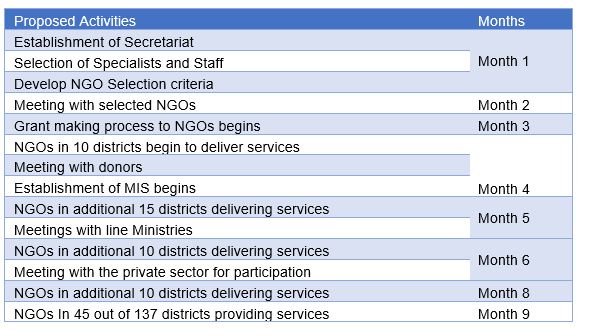
Details regarding the proposed activities and associated timelines, including budget layout summary, and the administrative and management costs for the operation are likely to be presented to the Government of Pakistan. Detailed information regarding the framework and design including program financials have been meticulously formulated are not disclosed in this paper but can be shared with relevant stakeholders. For reference, however, the following is a high-level plan of the proposed activities and associated timeline.
Proposed Activities and Associated Timeline
The following approvals and signs offs will be required for initiating the implementation plan:
- Notification for the establishment of the Population Planning Board.
- Approval and allocation of requisite budget as seed fund.
- Approval to hire professionals with relevant technical skills.
- Approval to operate the board as an autonomous and self-governing body.
Population Planning Board – Desired Objective
The management and operational strategy aim to streamline the process that will enable Pakistan to address existing barriers that have hampered population control (detailed above under section ‘Causes of Failure) and achieve the goal to further decrease fertility rates by 2030 (as pledged at ICPD 25 and Nairobi Conference Nov 2019). These include, but are not limited to ensuring:
- Political commitment from the highest level with persistent legislative reforms in accordance with evolving social and demographic needs. There is sustained engagement of legislators for championing and holding the executive accountable.
- Population remains a national cause and provincial contribution evolved by consensus and funds made available by provincial and federal government with understanding of long-term need and patience to wait for the results being critical due to crosscutting effect of the population variable on all socio-economic development sectors.
- All provincial Health Outlets take on family planning as an integral service with full commitment. Strengthen LHWs and other CHW programs supplemented by other interventions such as male engagement, premarital counseling, encouraging female education and life skills-based education for young people to learn benefits of family planning. Immediate high-level conversation and decision to come up with a more cost effective and expanded family planning program by ensuring provision of family planning services as part of broader maternal and family health services.
- Annual policy Review System is established at national and provincial leadership levels. Implementation of recommendations under composite coverage index CCI must be reviewed, and steps taken to realize it. This is complimented by research and evaluation which is mandated as an essential part of policy revision. Strong M&E system supported by availability of reliable service coverage data and frequent representative surveys such as the Performance, Monitoring for Action (PMA) and operations research.
Immediate Gains
The proposed operational strategy for population welfare in Pakistan aims to achieve immediate gains. This will be accomplished by demonstrating the government’s resolve emanating from the highest political and executive level, inspiring donor confidence to mobilize support, and establishing both the commitment and seriousness toward the issue at the national level.
The strategy also aims to challenge the existing program to perform better, leading to international recognition as a modern State. Additionally, the strategy will generate employment opportunities, especially for women in rural areas.
To achieve these goals, district-level NGOs and CBOs will be utilized as mechanisms for service delivery. Grants will be provided to ensure performance and control, and private sector expertise will be utilized for training and capacity building. Field monitoring will also be conducted to ensure compliance.
Conclusion
Policies to reduce population growth can make an important contribution to development (especially in the long run), and conversely failure to address the population problem will not only lead to greater poverty but will also reduce the set of macroeconomic and sectoral policies that are possible to counter it, and permanently foreclose some long-run development options. Population control and family planning programs are thus an imperative, especially for a country like Pakistan which is not only economically weak but has been classified as water scarce, food insecure, and one the most vulnerable to climate change.
Family planning programs seek to expand the availability of contraceptives and reduce barriers to their use. They are especially important for the poor, who typically have higher numbers of unwanted children than the rich except in settings with very effective programs. Family planning programs also typically disseminate information on contraception, and on how lower fertility can help parents invest in their children and avail new opportunities for raising living standards. Parents – especially poorer parents – have imperfect information on these issues. Households also appear to face difficulties in making optimal choices that involve long-term planning horizons.
In Pakistan, family planning programs can well be considered intrinsic to anti-poverty efforts by facilitating increases in living standards. They can serve to form part of a package of measures addressing basic government failures that help sustain poverty and high fertility ― including efforts to improve health and schooling, and to expand income earning opportunities. Subsequently, the program can help reach a more secure equilibrium in which people have fewer children and are able to invest more in them.
However, despite having one of the oldest family planning programs in the region, strategic disconnects between informed population policies and planning, and socio-economic development has resulted in limited progress not only towards lowering the fertility rates, but also in improving the contraceptive prevalence rates, resulting in a sluggish demographic transition. Effective administration and a robust management framework can help address the issues and overcome the barriers that Pakistan continues to face in realizing success with respect to population control measures.
Acknowledgments
The authors would like to acknowledge Dr. Babar Hussain, Dr. Ikram ul Haq, and Zarmeen Salim for their review and sharing their comments and feedback.
References
[1] UNFPA. “State of World Population Report provides infinite possibilities for Pakistan.” 2023.
[2] World Bank Data: Urban Population – Pakistan. 2023.
[3] State Bank of Pakistan. “Pakistan Debt and Liabilities – Summary.” 2023.
[4] UNICEF. “Pakistan – Education Challenge.” 2023
[5] Syed Mohammad Ali. “Pakistan’s depressing state of human development.” Tribune. 2023.
[6] World Bank. World Development Indicators. 2023.
[7] Syed Mohammad Ali. “Pakistan’s depressing state of human development.” Tribune. 2023
[8] US Current Population. (n.d.). https://www.census.gov/popclock/print.php?component=counter
[9] UNFPA. “Pakistan amidst an eight billion planet.” 2022.
[10] Macrotrends. Pakistan Population Density 1950 – 2024.
[11] Macrotrends. Pakistan Population Density 1950 – 2024.
[12] World Bank. “Population, Poverty, and Sustainable Development.” 2011.
[13] Bloom, David E. and Jeffrey G. Williamson. “Demographic Transitions and Economic Miracles in Emerging Asia.” World Bank Economic Review, 1998.
[14] Joshi, Shareen and T. P. Schultz. “Family Planning an Investment in Development: Evaluation of a Program‘s Consequences in Matlab, Bangladesh.” Economic Growth Center Discussion Paper, Yale University. 2007.
[15] World Bank. “World Development Report 2010: Development and Climate Change.” 2010.
[16] World Food Program. Country Profile: Pakistan. 2024.
[17] World Bank. “World Development Report 2010: Development and Climate Change.” 2010.
[18] World Bank. “Pakistan Development Update April 2023: Recent Economic Developments, Outlook, and Risks.” 2023.
[19] Government of Pakistan Finance Division. “Population Labour Force and Employment.” 2023.
[20] UNFPA. “Slow Progress of Family Planning in Pakistan and Possible Learnings from the Successful Experiences of Iran, Turkey, and Bangladesh.” Policy Brief. 2022.
[21] FP 2030. “Political Economy Family Planning.” 2023.
[22] FP 2030. Country Profile: Pakistan.
[23] FP 2030. Country Profile: Pakistan.
[24] Abdullah, M., Bilal, F., Khan, R. et al. “Raising the contraceptive prevalence rate to 50% by 2025 in Pakistan: an analysis of number of users and service delivery channels.” Health Res Policy Sys 21, 4. 2023.
[25] FP2020. “Pakistan FP2020 Self-Reporting Questionnaire 2019-2020.” 2020.
[26] UNFPA. “Slow Progress of Family Planning in Pakistan and Possible Learnings from the Successful Experiences of Iran, Turkey, and Bangladesh.” Policy Brief. 2022.
[27] Ibid.
[28] Ibid.
[29] Guttmacher. “Adding It Up: Costs and Benefits of Meeting the Contraceptive and Maternal and Newborn Health Needs of Women in Pakistan.” 2019.
[30] Guttmacher. “Adding It Up: Costs and Benefits of Meeting the Contraceptive and Maternal and Newborn Health Needs of Women in Pakistan.” 2019.
[31] UNFPA. “Formative evaluation of the UNFPA support to population dynamics and data.” 2023.
[32] Japan International Cooperation Agency. “Population Evaluation.”
[33] World Bank. “Pakistan – Poverty Alleviation Fund Project.” 2010.
[34] Government of Pakistan: National Commission on the Rights of Child. “The Legal Framework for Child Marriage in Pakistan.” Policy Brief. 2023.
[35] Pakistan Demographic and Health Surveys. Final Report 2017-18. 2019.
[36] Knowledge Commons. “Reproductive Health Analysis.” 2023.


